- SODP Weekly Bulletin
- Posts
- The Weekly Bulletin | January 06, 2026
The Weekly Bulletin | January 06, 2026
Catch up on your members' content, check out the community buzz, and browse through job opportunities

Vahe Arabian
January 06, 2026

Hi SODP community, Happy New Year!
Let's recap on what's been happening, the new content, industry updates, tips, and more.
.TIP OF THE WEEK.
Tips on how to leverage Agentic AI for 2026
Right now, we're witnessing a pivotal moment in enterprise AI adoption. Agentic AI systems that can act autonomously to achieve goals is transitioning from experimental pilots to production-scale deployments. This shift represents more than just technological maturation; it's a fundamental change in how organisations operate.
Here's what leaders need to know about this transformation and how to take advantage scaled agentic AI deployment:
Infrastructure Readiness: The Foundation for Scale
Moving agentic AI from pilot to production requires robust infrastructure that most organizations don't yet have. Unlike traditional AI models that simply predict or classify, agentic systems need to interact with multiple tools, databases, and APIs while maintaining security and compliance.
👉 Actionable Tip: Audit your current infrastructure for API connectivity, authentication systems, and observability tools. Invest in orchestration platforms that can manage multi-step agent workflows and provide proper logging for compliance and debugging.
Trust and Governance Frameworks Become Critical
In pilot phases, companies can tolerate occasional errors. At scale, agentic AI systems making autonomous decisions require comprehensive governance frameworks. Organizations must define clear boundaries for agent autonomy, establish approval thresholds, and create rollback mechanisms.
👉 Actionable Tip: Develop a tiered autonomy model where agents have different permission levels based on risk. Implement human-in-the-loop checkpoints for high-stakes decisions and create transparent audit trails for all agent actions.
From Single-Purpose to Multi-Agent Orchestration
Early pilots typically focus on single-use cases—a customer service agent or a data analysis assistant. Production-scale deployment means coordinating multiple specialized agents that work together, each handling distinct tasks while sharing context and goals.
👉Actionable Tip: Design your agentic systems with modularity in mind. Create specialized agents for distinct functions (research, analysis, execution) that can collaborate through standardized protocols. This approach enables easier scaling and troubleshooting.
ROI Measurement Shifts from Proof-of-Concept to Business Impact
Pilot success is often measured by technical feasibility—"Does it work?" Production requires demonstrable business value: cost savings, revenue generation, or productivity gains that justify the investment.
👉 Actionable Tip: Establish clear KPIs before scaling. Track not just agent performance metrics (accuracy, response time) but business outcomes (customer satisfaction scores, operational cost reduction, time-to-resolution). Build attribution models that connect agent actions to business results.
Data Quality and Access Become the Bottleneck
Agentic AI systems are only as effective as the data they can access. At scale, data fragmentation, inconsistent formats, and access restrictions become major obstacles. Organizations discover that their biggest challenge isn't the AI, it's the data infrastructure.
👉 Actionable Tip: Prioritize data integration and standardization efforts. Implement semantic layers that give agents consistent access to enterprise data regardless of source. Consider investing in knowledge graph technologies that help agents understand relationships between data points.
Change Management: Preparing Teams for AI Collaboration
The shift to production-scale agentic AI fundamentally changes how teams work. Employees need to learn when to delegate to agents, how to verify agent outputs, and how to collaborate effectively with autonomous systems.
👉 Actionable Tip: Develop comprehensive training programs that go beyond tool usage to teach AI collaboration skills. Create clear escalation paths when agents encounter problems, and establish feedback loops where human users can improve agent performance over time.
Cost Management and Resource Optimization
Pilots run on limited budgets with predictable costs. Production-scale agentic AI can consume significant computational resources, especially when agents make multiple API calls or process large datasets autonomously. Runaway costs become a real risk.
👉 Actionable Tip: Implement cost guardrails and resource quotas for agent operations. Use caching strategies to reduce redundant API calls, and establish monitoring systems that alert teams to unusual resource consumption patterns before they impact budgets.
Organizations that succeed in scaling agentic AI will be those who:
Build a robust infrastructure with proper security and observability
Establish clear governance frameworks with appropriate autonomy boundaries
Design for multi-agent collaboration rather than siloed solutions
Focus on measurable business outcomes, not just technical capabilities
Prioritize data quality and access as foundational requirements
Invest in change management and team readiness
Implement proactive cost management and resource optimization
The transition from pilot to production isn't just about technical scaling; it's about organizational readiness. Companies that approach this shift strategically, with attention to infrastructure, governance, and human factors, will unlock the transformative potential of agentic AI.
The question isn't whether agentic AI will move to production at scale; it's whether your organization will be ready when it does..
.NEWS OF THE WEEK.
➡️ Google Discover’s Big Miss: Publishers Lost At Sea While AI, Spam, Expired Domains and Big News Cash In. No search terms. No SEO tricks. No need to outspend legacy media or reverse-engineer opaque ranking systems. Publish something timely, original, and genuinely interesting, and Discover would quietly reward you. For small and mid-sized publishers, it felt like a rare moment where quality could outrun scale. That moment, sadly has gone for most of us. They were halcyon days to be sure, but it’s unlikely they will return. Or will they?
➡️ In 2026, AI will move from hype to pragmatism. If 2025 was the year AI got a vibe check, 2026 will be the year the tech gets practical. The focus is already shifting away from building ever-larger language models and toward the harder work of making AI usable. In practice, that involves deploying smaller models where they fit, embedding intelligence into physical devices, and designing systems that integrate cleanly into human workflows.
➡️ 16 Content Writing Tips From Experts To Survive 2026. AI has created insecurity for content writers, where their jobs could be in jeopardy from machine-generated content at scale. The reality is that many content writers may be displaced, but the ones that can survive and be in demand are the ones who embrace the current changes in search and adapt. Writers can be irreplaceable by learning how to create valuable content that is optimized for large language model (LLM) inclusion. They can also stand out by creating the kind of content that takes advantage of LLM and machine content limitations.
➡️ Advertising Will Boom in 2026, but Hollywood Is at Risk of Being Left Behind. 2025 was the year that advertising dealt with shocks to the system: AI disruption reverberated across every part of the ecosystem, Omnicom completed its $13 billion megadeal for IPG, creating a marketing Goliath, and tariff uncertainty threw certain sectors into chaos. But when it was all said and done, the ad business grew in 2025, with WPP Media raising its estimate to 8.8 percent for the year, and Madison & Wall raising its estimate to 11 percent growth. Both prognosticators expect 2026 to continue that growth trajectory, with WPP Media forecasting 7.1 percent growth this year (excluding political advertising) and Madison & Wall forecasting 6.6 percent growth this year (also excluding political).
➡️ How will AI reshape the news in 2026? Forecasts by 17 experts from around the world. As we enter 2026, and the third year since the transformative release of ChatGPT, journalists and media managers are wondering what the next frontier for generative AI and the news will be. We got in touch with some of the most prominent voices working in this space (and put out an open call to our audience) to get a sense of what this year might bring. An obvious and important caveat: neither our respondents nor we have a crystal ball, and nobody knows for sure what the future holds.
.SODP POSTS.
18 Best Ad Networks for Publishers in 2026
Ad revenue represents one of the three monetization pillars publishers have access to — with the others being subscriptions and affiliate marketing. As such, those publishers that have prioritized ad revenue need to ensure they pick the right ad network.
The global digital advertising market is projected to hit around $1.3 trillion by 2027, driven by factors such as the growing adoption of smartphones and the ongoing rollout of the Internet of Things (IoT).
The role of digital advertising remains pivotal to brand strategies, with research showing that around 50% of online users search for a product video before making a purchase.
The growth of digital advertising and how mobile ad networks work offers immense monetization opportunities for publishers that are in a position to capitalize. A key element of that positioning is the ad networks they choose.
When choosing an ad network, it’s important to consider the ad formats available, the targeting options, the optimization tools and the revenue share.
➡️ NEXT.io (UK) is seeking a Senior Journalist to join their Media team, who will take ownership of key beats in the iGaming industry, covering regulation, M&A, product launches, and market entries, while delivering fast, accurate, integrity-first journalism. (UK, Remote).
➡️ Fox News Digital (New York) is seeking a sharp, fast, and strategic Politics Editor to anchor their swing shift (12–8pm ET) coverage of politics on FoxNews.com and FoxBusiness.com. (New York, Hybrid).
➡️ The Sunday Times (UK) is looking for a Head of News to lead their news coverage, and work closely with the editor and the deputy editor to deliver a distinctive, agenda-setting news package across all platforms. (UK).
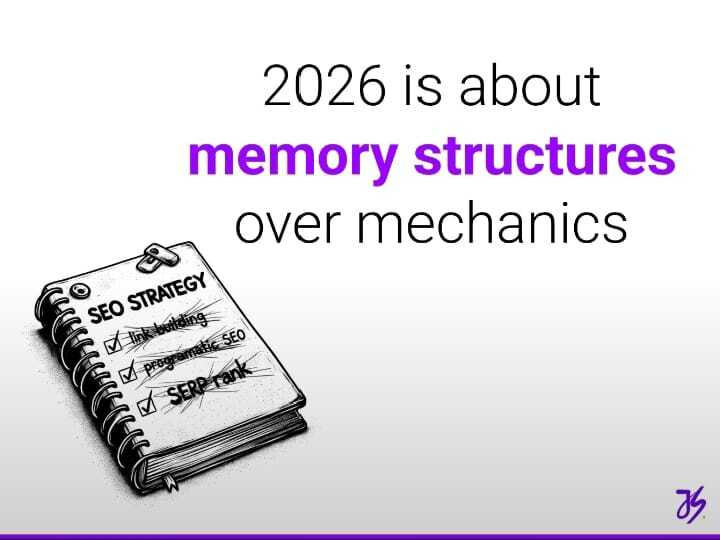
➡️ Jes Scholz on LinkedIn:
AI has made this year uncomfortable.
Not because SEO professionals lack skill or effort. But because our industry became exceptionally good at optimising for things that weren’t worth optimising for in the first place.
Link built for the sake of links. Thin content pushed into the index. A sole focus on ranking in search.
For a long time, those tactics worked because they exploited a gameable system. They moved vanity metrics. They looked like SEO success.
But they weren't durable, as AI surfaces make painfully clear, because they don't grow the brand. So a lot of past work now feels hollow.
This discomfort is corrective.
SEO in 2026 shifts from manipulating signals to building memory structures for humans, algorithms and AI systems.
This requires a deeper understanding of marketing than many SEOs have been asked to practise before.
These are the highlights for the last week.
Until next!
Vahe Arabian and the editorial team at SODP
.JOB BOARD.